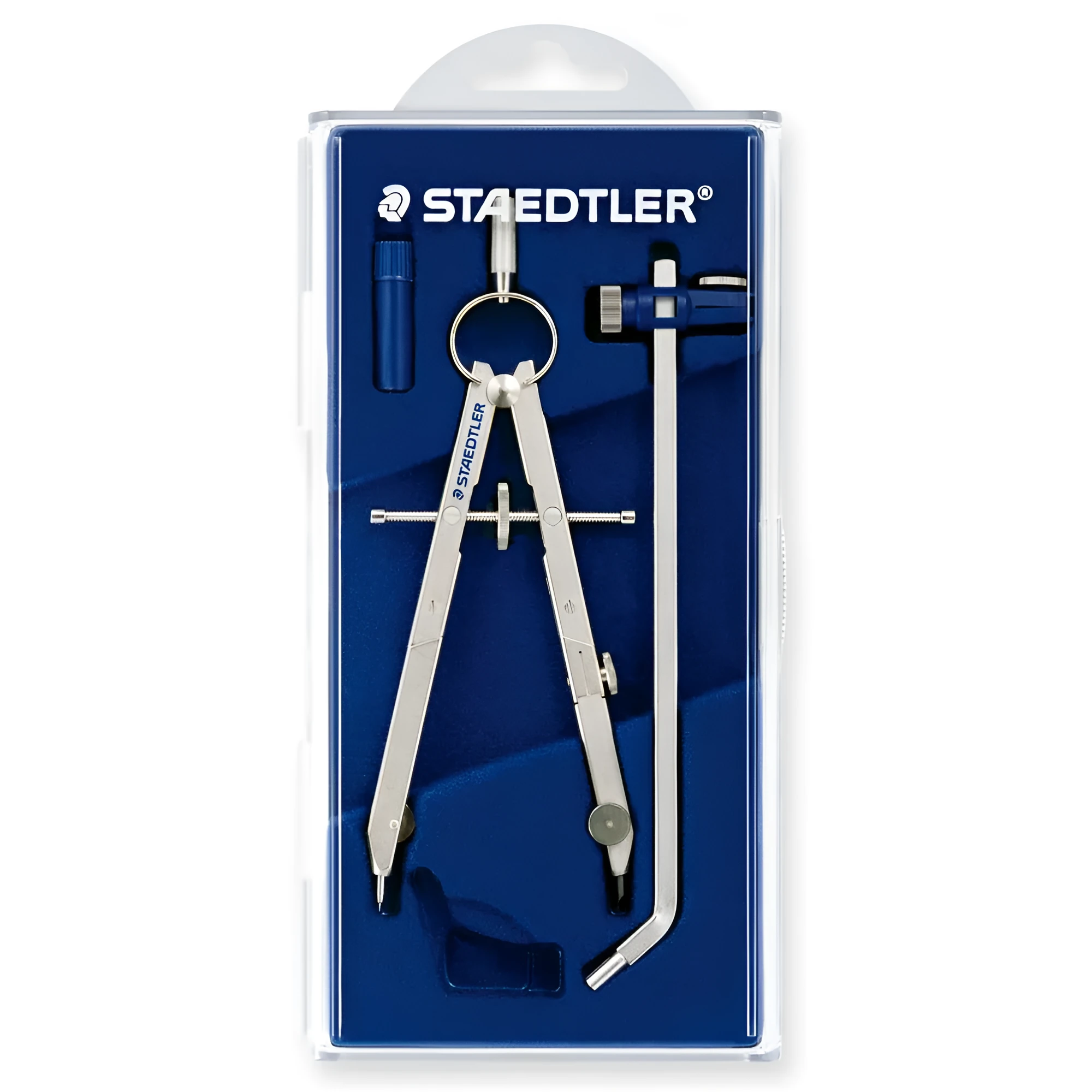
Precision car compass telescopic rod drawing compass with a maximum circular diameter of about 265mm, crafted from steel for technical drafting and geometric constructions.


Precision car compass telescopic rod drawing compass with a maximum circular diameter of about 265mm, crafted from steel for technical drafting and geometric constructions.
STAEDTLER 551 01 Steel Precision Car Compass for Technical Drafting

For draughtsmen, architects, engineers, and dedicated hobbyists, achieving precise circles and arcs is a fundamental requirement. The STAEDTLER 551 01 precision car compass addresses this need with a focus on mechanical reliability and adjustable functionality. Its primary design caters to technical drawing applications where accuracy and consistency are paramount, offering a tool that feels solid in the hand and performs predictably on the page. This compass is engineered for the creation of geometric constructions, detailed diagrams, and any artwork requiring exact circular forms.
Features and Construction
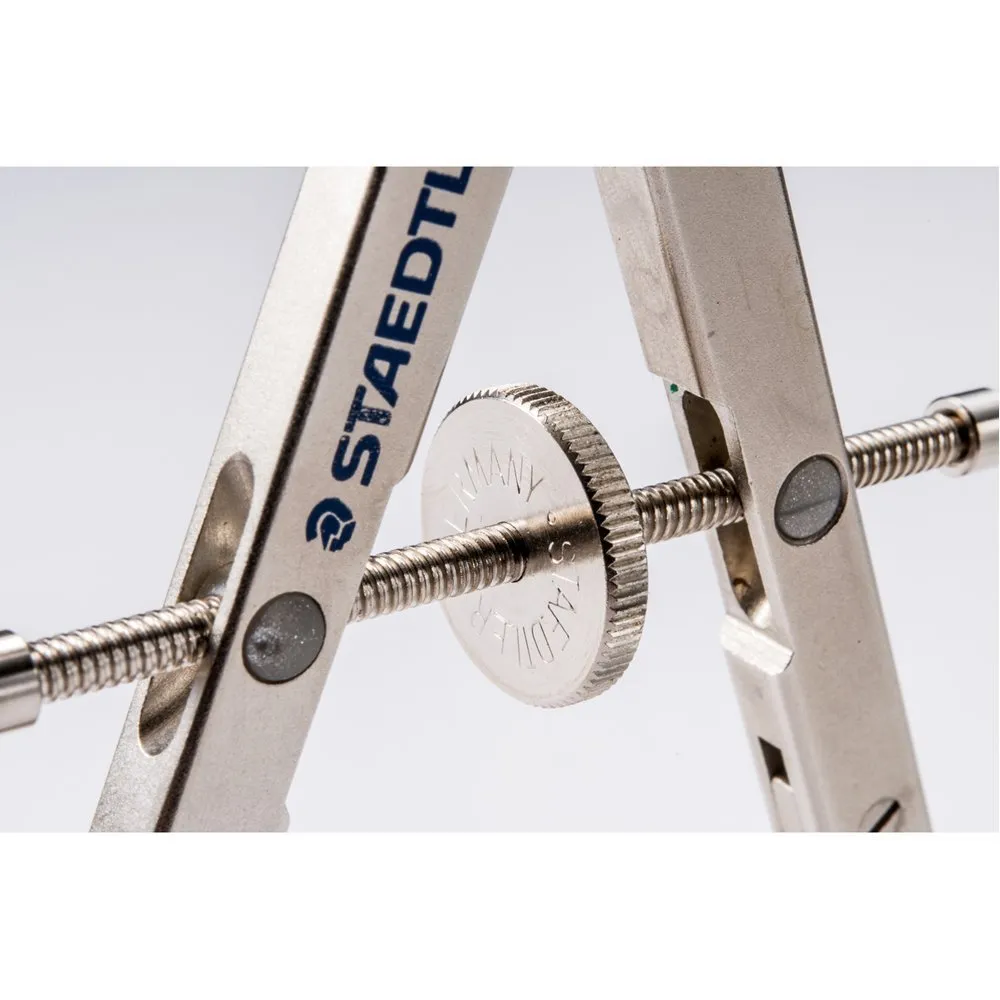
The STAEDTLER compass is defined by its practical build and measurable specifications, which directly support its function as a precision instrument.
Material and Build
The compass is constructed from steel, a material chosen for its strength and dimensional stability. This construction contributes to the tool's weight and feel, helping to minimise unwanted movement during use and providing a firm base for the drawing point. The steel components are designed to work together smoothly, allowing the user to set and maintain a specific radius without slippage, which is critical for repeated measurements in technical work.
Size and Practical Fit
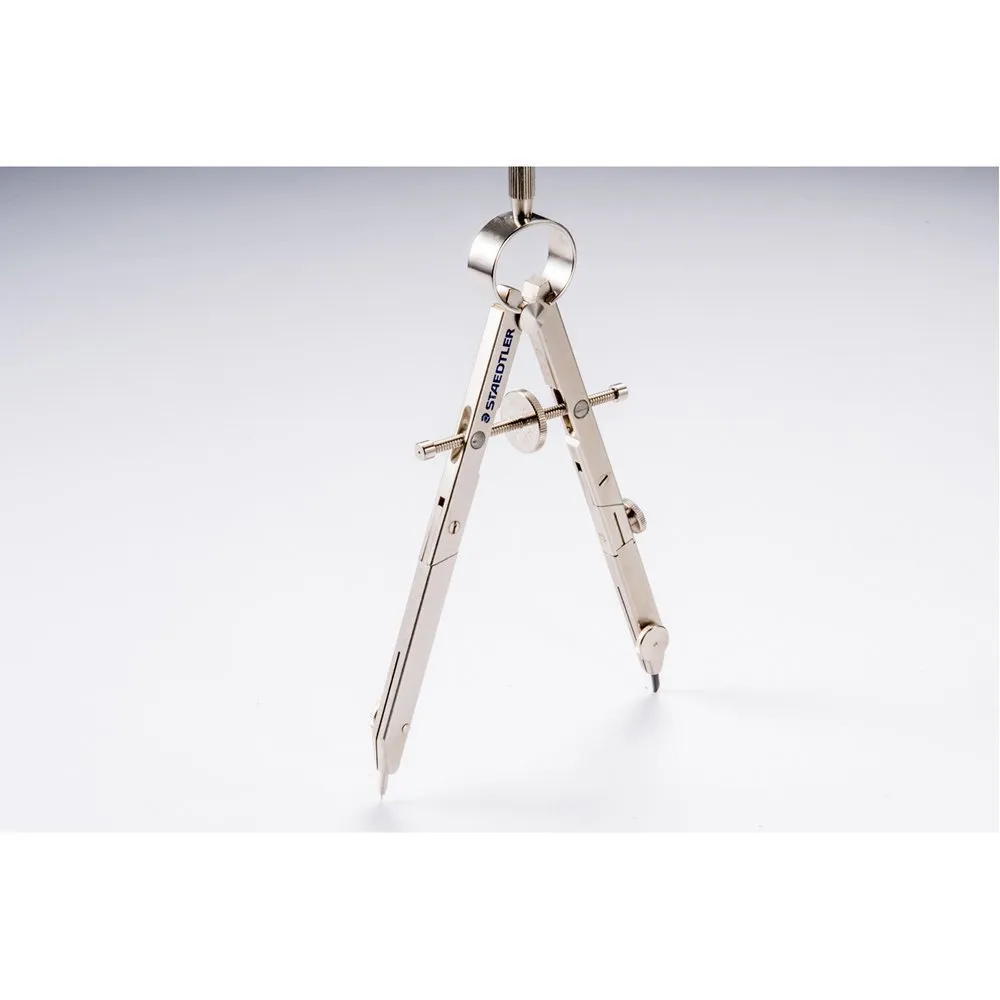
The key specification for any compass is its drawing capacity. This model offers a maximum circular diameter of approximately 265mm, which covers a wide range of common drafting scales from small components to larger schematic outlines. The telescopic rod is the feature that enables this range, allowing the user to extend the compass to the required radius and lock it securely in place. The overall packing size of 180mm by 77mm indicates a compact form for storage and portability within a draughtsman's toolkit or pencil case.
Uses and Placement
This compass is not a general-purpose stationery item but a specialist tool with clear applications in structured drawing environments.
Event or Professional Use
In professional settings such as architectural studios, engineering design offices, or technical illustration workplaces, this compass serves as a reliable piece of equipment. It is suitable for creating precise circles in construction blueprints, mechanical part diagrams, electrical circuit schematics, and site plans. The steel build ensures it can withstand regular use in a studio environment, maintaining its calibration and point sharpness over time with careful handling.
Everyday Home Use
For advanced art students, model makers, or serious hobbyists working at home, this compass brings professional-grade precision to a personal workspace. It is ideal for geometry homework, technical drawing coursework, scale model plans, or intricate mandala and pattern creation where exact radii are important. Its adjustable nature means one tool can serve for multiple project sizes, from detailed illustrations to larger poster designs.
Benefits and Buying Value
The value of this drawing compass lies in its focused design, material choice, and the practical problem it solves for the user.
Reuse and Low Maintenance
A well-made compass is a long-term investment. The steel construction suggests a product built for repeated use rather than single projects. With proper care—keeping the points protected and the mechanism clean—this tool can remain a functional part of a drafting set for years. It eliminates the need for disposable or less accurate circle-drawing methods, providing a consistent result every time it is used.
Why Choose This Product
Choosing this STAEDTLER compass means selecting a tool designed for a specific task: accurate circular drawing. Its advantages are concrete: the steel material offers stability, the 265mm maximum diameter provides useful range, and the telescopic rod allows for fine adjustment. It is a functional choice for anyone whose work or study genuinely depends on precise geometry, positioning itself as a dedicated instrument rather than a novelty item.