
Children's Educational Toy Wind Car DIY Electronic Kit Science Experiment Creative Invention Physics Learning Toy with Acrylic Metal Plastic Construction Measuring 7.7cm x 10cm x 8.2cm


Children's Educational Toy Wind Car DIY Electronic Kit Science Experiment Creative Invention Physics Learning Toy with Acrylic Metal Plastic Construction Measuring 7.7cm x 10cm x 8.2cm
Wind Car DIY Electronic Kit: A Hands-On Physics Experiment for Children's Science Education
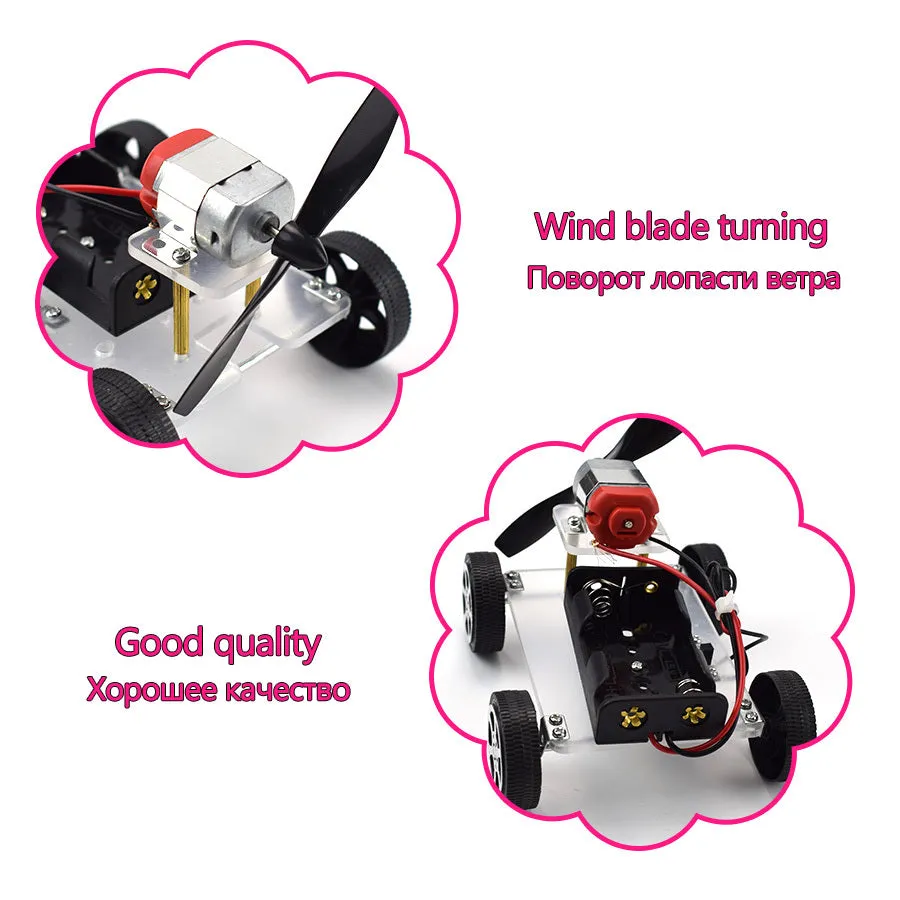
This Wind Car DIY Electronic Kit offers a tangible entry point into the worlds of physics, mechanics, and basic electronics for young learners. As a creative invention toy, it transforms abstract scientific concepts into a manageable, engaging building project. The kit arrives with all the components needed, including batteries, allowing children to progress from unassembled parts to a functioning, wind-responsive model car. Designed specifically as an educational science toy, it focuses on the characteristics of creative physics experiments, aiming to develop cognitive thinking abilities through practical, problem-solving assembly and experimentation. The finished model, with its compact dimensions, serves as a physical testament to the principles learned during construction.
Features and Construction

This kit's design is centred on providing a complete, self-contained educational experience. Every element, from the material choice to the final dimensions, supports its role as a scientific training tool for early learning.
Material and Build
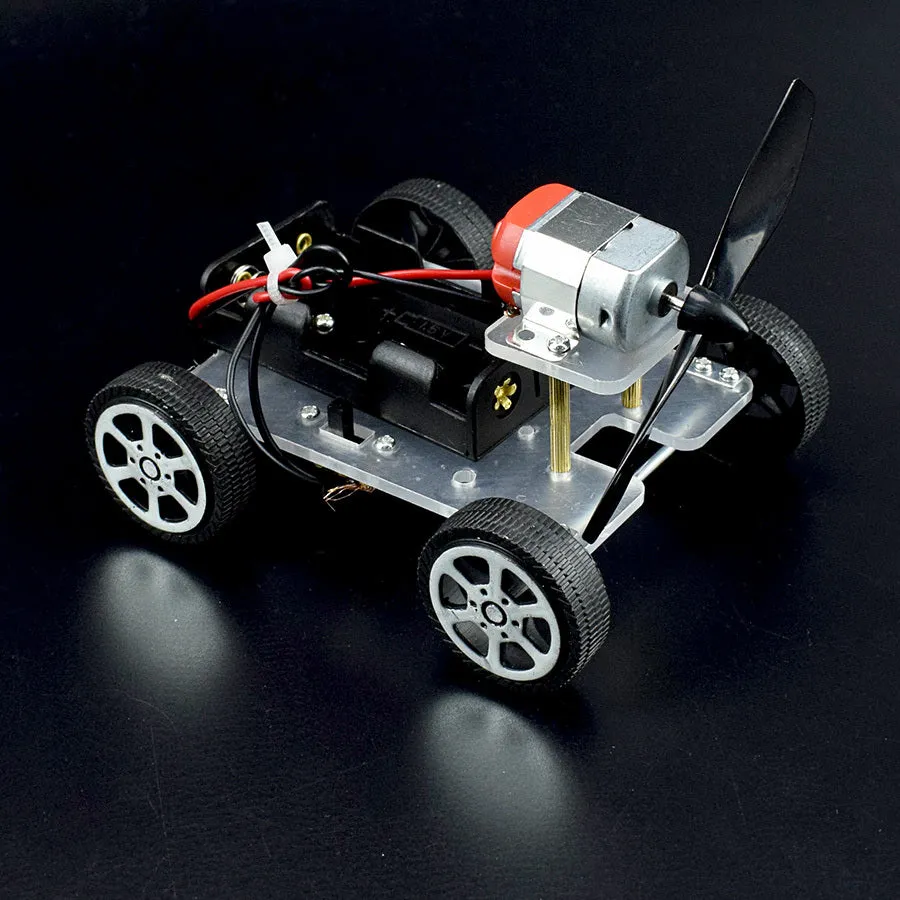
The wind car is constructed from a specified blend of acrylic, metal, and plastic. The acrylic components likely form transparent or coloured structural panels, allowing for visibility of internal mechanisms. Metal parts are integrated for essential functions such as electrical conductivity in the circuit or for structural axles and gears. Plastic elements provide housing, connectors, and non-conductive supports. This multi-material approach introduces builders to different material properties and their practical applications in model engineering, contributing to the kit's educational value on material science alongside physics and electronics.
Size and Practical Fit
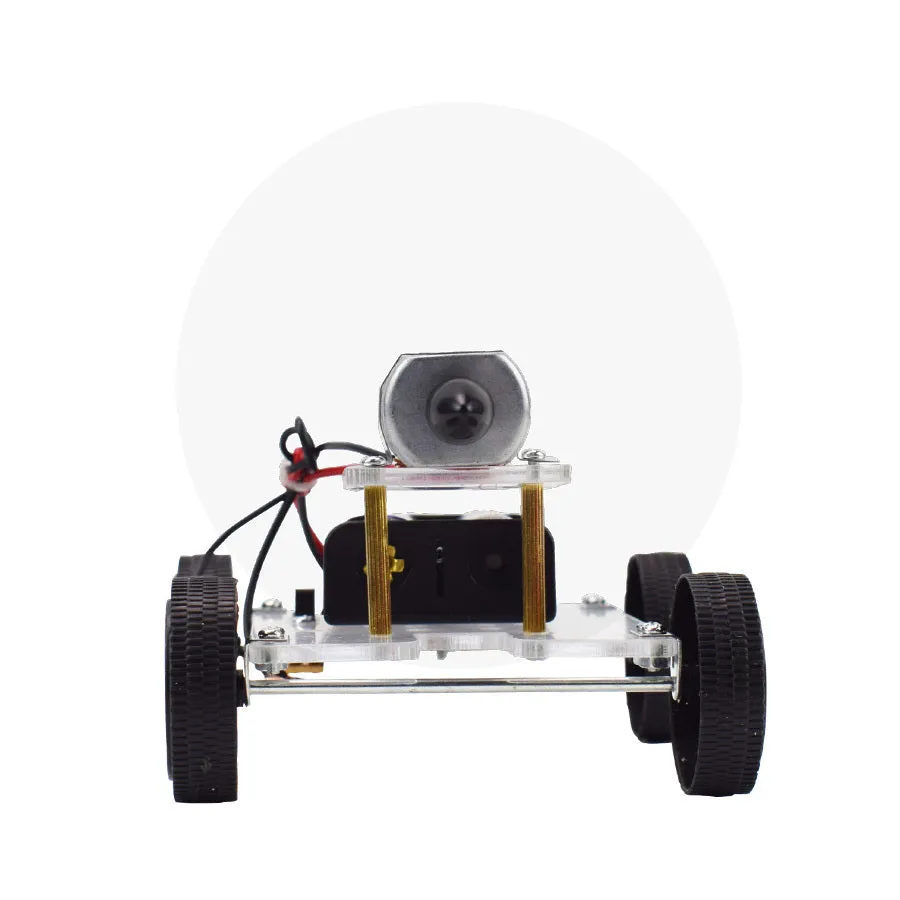
Once fully assembled, the wind car model is a compact unit, measuring 7.7 cm in width, 10 cm in length, and 8.2 cm in height. These dimensions (also provided as 3.03 by 3.94 by 3.23 inches) make it a manageable size for detailed observation and experimentation on a tabletop or desk. The scale is suitable for demonstrating aerodynamic and mechanical principles without requiring excessive space, making it ideal for use in home learning environments, classrooms, or science clubs. Its size is practical for storage and transport once built.
Uses and Placement
The primary function of this kit extends beyond simple assembly into active learning and demonstration. It is designed for scenarios that blend education with hands-on creativity.
Event or Professional Use
In structured educational settings like school science fairs, classroom demonstrations, or weekend STEM clubs, this wind car kit acts as a standardised project. Educators can use it to illustrate fundamental concepts of renewable energy (wind power), simple circuits, and gear trains. Its complete nature, with batteries supplied, ensures a consistent starting point for all participants, allowing the focus to remain on the learning process and experimental outcomes. It serves as a controlled variable in group learning activities exploring scientific method and engineering design.
Everyday Home Use
For individual learning at home, this kit provides a stimulating alternative to passive entertainment. It offers a focused project that parents and children can work on together, culminating in a functional toy they have built themselves. The act of following assembly steps to create a moving vehicle from separate pieces fosters patience, fine motor skills, and logical sequencing. After construction, the completed wind car can be used for further experiments—testing it in different wind conditions, on various surfaces, or with modifications—effectively extending the play and learning value beyond the initial build.
Benefits and Buying Value
The value of this educational toy lies in its integrated approach to learning, combining a physical project with conceptual understanding in a reusable format.
Reuse and Low Maintenance
The durable construction from acrylic, metal, and plastic suggests the assembled model can withstand repeated use in experiments. The electronic components, powered by standard, readily available AA batteries (as recommended), allow for multiple testing sessions. Should a part become loose or a connection fail, the DIY nature of the kit means the builder has already learned how it fits together, facilitating basic troubleshooting and repair. This promotes a mindset of investigation and reuse rather than disposable play.
Why Choose This Product
Choosing this wind car kit provides a definitive, all-in-one solution for introducing hands-on science. Unlike generic craft sets, it has a clear learning objective centred on physics and electronics, with a specific outcome—a working wind-powered vehicle. The inclusion of batteries removes an immediate barrier to play, while the precise dimensions and stated materials offer transparency about what is being built. It represents a focused investment in educational play that bridges the gap between theoretical science concepts and tangible, enjoyable application.
